Keynote Plenary Talks
Critical Minerals Separations: AI/ML -Driven Laboratories and DOE Opportunities
Wednesday, May 13 from 8:15-9:15 a.m.
Filtration and membranes are used for the separation of critical materials and rare-earth elements (REEs). As part of the mining operation and waste recovery, it is essential to advance methods and materials to increase throughput and efficiency. The U.S. Department of Energy (DOE) has taken on the mission of bringing new technologies together with discovery science to augment the minerals and extraction industry. AI/ML has transformed the way we optimize processes and conduct high-throughput science, alongside self-driving laboratories (SDLs) and data analytics. Oak Ridge National Laboratory (ORNL) has been involved in membrane development and testing for many industries, including leadership with the Critical Minerals Institute (CMI). This talk will highlight advanced materials and manufacturing, with new experimental methods and applications that use AI/ML-driven SDLs for critical minerals and REE recovery. Liquid-phase separations and pervaporation (liquid-to-gas) are essential, as are new polymer resins. The talk will describe efforts in high-performance polymer membranes and engineered nano-scale materials targeting higher recovery in unconventional sources (waste, mine drainage, tailings). We will also describe funding and collaborative opportunities with the U.S. Department of Energy (DOE). Together with the Genesis Mission and the Office of Critical Minerals and Energy Innovation (CMEI), the goal is to enhance domestic supply chains and commercial viability efforts, thereby reducing America’s dependence on foreign sources, strengthening national security, and promoting American energy independence.
About the Keynote Speaker
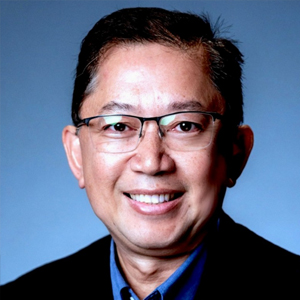
Prof. Rigoberto Advincula
Oak Ridge National Laboratory
Rigoberto Advincula is a Governor’s Chair Professor of Oak Ridge National Laboratory (ORNL) and the University of Tennessee, Department of Chemical and Biomolecular Engineering. He is also a Group Leader at the Center for Nanophase Materials Sciences (CNMS), ORNL. His areas of expertise include organic and polymer chemistry, nanomaterials, flow chemistry and reaction engineering, additive manufacturing, separations, and biomaterials. He has led major projects, including a machine learning (ML) flow chemistry and separations lab at ORNL and advanced nanocomposite manufacturing with DOE. He is a Fellow of the National Academy of Inventors, Fellow of the American Chemical Society (ACS), Fellow of the Materials Research Society (MRS), Fellow of the Royal Society of Chemistry, and the Netzsch NATAS 2023 Fellow. In 2024, he received the International Prize of the Society of Polymer Science of Japan (SPSJ) He has been appointed to the World Economic Forum, Advanced Materials Council. He has held several visiting Professor positions, including Waseda University in Japan and the Max Planck Institute for Polymers (MPI-P) Research in Germany. He obtained his Ph.D. in Chemistry at the University of Florida and had Post-doctoral Positions at the MPI-P and Stanford University. He is passionate in mentoring students and establishing interdisciplinary STEM programs.
Filtration: The Unsung Enabler of the Energy Transition
Protecting Efficiency, Compliance, and Reliability in a Changing Energy Landscape
Thursday, May 14 from 8:30-9:15 a.m.
As the world navigates the complex path of energy transition, i.e., moving from carbon-intensive systems toward cleaner, more efficient energy solutions, the role of filtration is more critical than ever. This talk will explore how filtration and separation technologies underpin every facet of energy evolution, from renewables and hydrogen to advanced fuels and electrification. Regardless of the transition’s pace or direction, filtration ensures system reliability, regulatory compliance, and operational efficiency amid new contaminants, tighter emissions standards, and mixed technology fleets and consumption. By enabling legacy infrastructure to adapt, supporting the adoption of new fuels, and safeguarding asset longevity, filtration acts as a force multiplier, quietly driving immediate emissions reductions and facilitating sustainable growth. This talk will highlight why, in the ongoing re-engineering of global energy systems, the success of clean technology depends not only on headline innovations but on the often-overlooked science of keeping those systems clean, efficient, and resilient.
About the Keynote Speaker
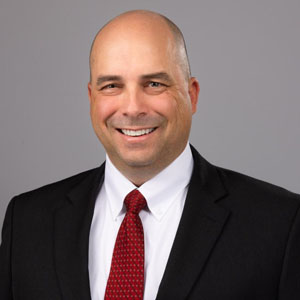
Greg Hoverson
Atmus
Greg Hoverson is the Vice President and Chief Technical Officer for Atmus where he leads the global engineering and R&D organization, spanning five technical centers located across four different countries. With a passion for innovation and quality, Greg oversees technology development and implementation across the company.
Previously, Greg served as Executive Director of Global Engineering for Cummins Filtration and has worked in the filtration technology industry for 28 years, all of those within the Cummins Filtration engineering and technology organization. Greg holds 22 U.S. patents and received Cummins’ prestigious Dr. Julius Perr Innovation Award in 2013 for work on a polymer spin-on filter design.
In his early career, Greg worked as a manufacturing engineer for Rosemount, Inc. in Chanhassen, Minnesota. Greg has a Bachelor’s in mechanical engineering from North Dakota State University.